
Winter and highway towing
How to tow safely on snowy, icy and long northern Alberta highways: tires, following distance, sway, hills and road reports.
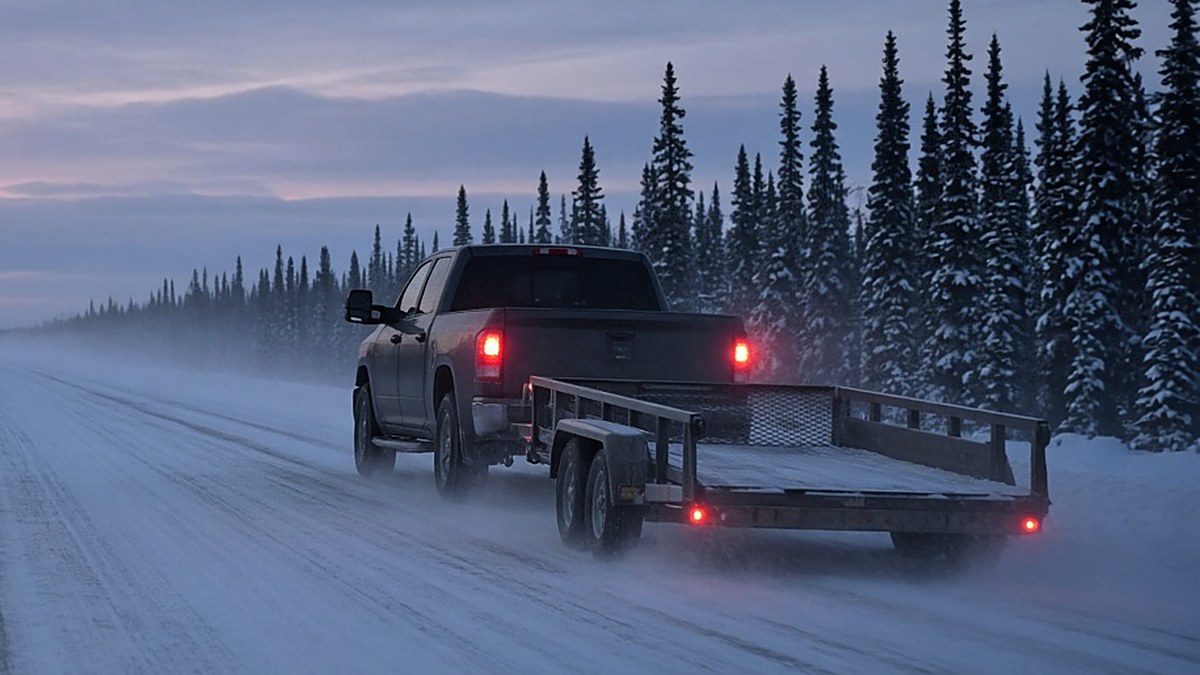
Most towing advice is written for summer. Northern Alberta winters add cold tires, short days, blowing snow and long gaps between services. This section collects what matters most.
The essentials
- Road reports: check 511 Alberta for your whole route before you leave.
- Tires: Transport Canada says all-season and summer tires begin to lose traction below 7 °C, and recommends winter tires on all wheels. Alberta doesn't require them, but recommends four winter or all-weather tires with the mountain-and-snowflake symbol.
- Space: leave at least one truck-and-trailer length per 16 km/h in good conditions, and much more in winter.
- Stopping: four-wheel drive helps you get going in snow, but it doesn't help you stop.
- Sway: ease off the throttle and hold the wheel steady. Don't brake hard or try to steer out of it.
Get the full, step-by-step version in our winter towing checklist for northern Alberta highways.
Guides in this section
 Illustrative image
Winter and highway towing
Winter towing checklist for northern Alberta highways
A sourced, step-by-step checklist for towing a trailer, sled deck or camper in winter: tires, hitch and chains, trailer brakes, lights, following distance, sway and hills.